
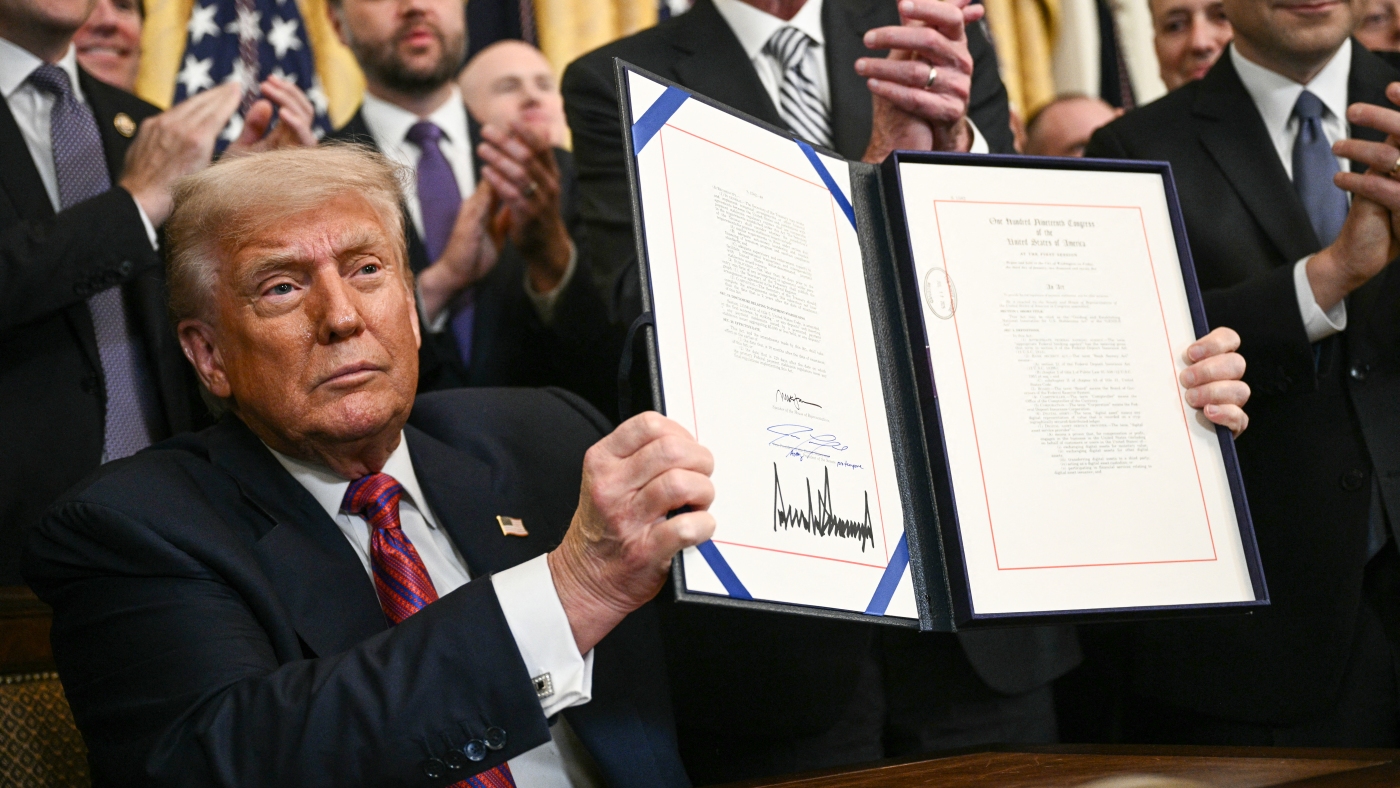
Trump Signs Landmark Crypto Legislation
President Trump officially unveiled the GENIUS Act — the first significant piece of cryptocurrency legislation passed by Congress — during a ceremony held at the White House on July 18, 2025. Historically, the U.S. government has taken a cautious stance towards cryptocurrencies, labeling them as too risky for both the average citizen and the broader financial system. However, this perspective appears to be shifting. In a landmark vote, the House of Representatives recently approved the GENIUS Act, marking a pivotal change in the U.S. government’s approach to digital currencies. Following the legislative approval, the overall market capitalization of cryptocurrencies surged to an unprecedented $4 trillion, reflecting the enthusiasm permeating the industry.
Trump’s Vision for Crypto Dominance
During the signing ceremony, President Trump expressed his ambition to position the United States as the “crypto capital of the world.” He stated, “Today, we take a monumental step to solidify America’s leadership in global finance and cryptocurrency technology by enacting the GENIUS Act.” This legislation introduces new regulations aimed at a specific subset of the crypto market known as stablecoins, which are designed to maintain a stable value. The passage of this bill paves the way for additional legislative measures, as two other crypto-related proposals are currently under consideration in Congress.
CLARITY Act’s Implications for Crypto Regulation
Among the other bills in progress, the CLARITY Act has garnered significant attention from the crypto community. Recently approved by the House as part of what has been termed “crypto week” by Republican legislators, this bill would delegate regulatory oversight of the crypto market to the Commodity Futures Trading Commission (CFTC), a smaller regulatory body. This change could significantly alter the landscape of cryptocurrency regulation in the U.S., with critics expressing concerns that it might lead to diminished oversight of an already volatile sector. The bill now advances to the Senate, where its fate remains uncertain, as opponents are gearing up to contest it fiercely.
Supporters Believe in Financial Innovation
For proponents of cryptocurrency, this week marks a significant win. Advocates contend that digital currencies signify the future of finance. While they acknowledge the existence of less reputable elements within the crypto space, such as meme coins, they maintain that cryptocurrencies can deliver genuine utility. Stablecoins, in particular, are considered a safer form of digital currency, as each stablecoin is backed by a corresponding amount of fiat currency, ensuring that for every dollar in stablecoin issued, there is a dollar in reserve. This structure positions stablecoins as quasi-cash, enabling seamless and cost-effective cross-border transactions.
Critics Warn of Potential Risks
However, dissenting voices remain skeptical. Although the GENIUS Act incorporates some consumer protections—such as requirements for stablecoin issuers to maintain adequate reserves and comply with anti-money laundering regulations—critics argue that these measures are insufficient and overly influenced by a well-funded crypto lobby. The industry reportedly invested over $100 million in Congressional races last year and is amassing an even larger campaign fund ahead of the upcoming midterm elections. Amanda Fischer, policy director at consumer advocacy organization Better Markets, expressed concerns, stating, “This legislation is more hype than substance, and while the current payment system has flaws, this bill will not resolve them and may actually worsen them.”
Industry Defends New Regulations
Despite the criticism, advocates within the stablecoin sector defend the provisions established by the GENIUS Act, which received bipartisan support, including significant backing from Democrats. Dante Disparte, chief strategy officer for Circle, a prominent stablecoin issuer, asserted, “The legislation sets clear standards that even large banks must follow when engaging in stablecoin transactions.” He emphasized that the support from a substantial number of Democrats indicates a collective belief in the bill’s consumer protection measures, claiming it represents one of the most significant advancements in financial regulation in decades.
Crypto Sector’s Future and Political Backing
Despite the backlash, the cryptocurrency industry remains optimistic, buoyed by substantial financial resources for political contributions and the backing of President Trump. The former president and his family have engaged with the crypto sector, including investments in World Liberty Financial, a company exploring various crypto ventures, including launching its own stablecoin. The industry’s next major objective is the CLARITY Act, which seeks to shift regulatory authority away from the Securities and Exchange Commission (SEC) — often viewed as Wall Street’s regulatory enforcer — which has historically clashed with the crypto community, especially during the Biden administration.
Concerns About Oversight and Consumer Protection
Under the leadership of former SEC chair Gary Gensler, the agency took a hard stance against the crypto industry, pursuing actions against entities like the now-defunct exchange FTX and its founder Sam Bankman-Fried. The Biden administration’s approach aimed to impose the same regulations on crypto firms as those faced by traditional financial institutions. However, the crypto sector argues for a distinct regulatory framework tailored to its unique characteristics. Critics caution that this could result in a precarious financial environment where new products flood the market with less oversight, potentially compromising consumer safety. “We are embarking on an uncontrolled experiment with our financial system, utilizing technology that has yet to fulfill its promises,” remarked Mark Hays from Americans for Financial Reform. Nevertheless, with the passage of the GENIUS Act, the cryptocurrency industry is poised to forge ahead.


